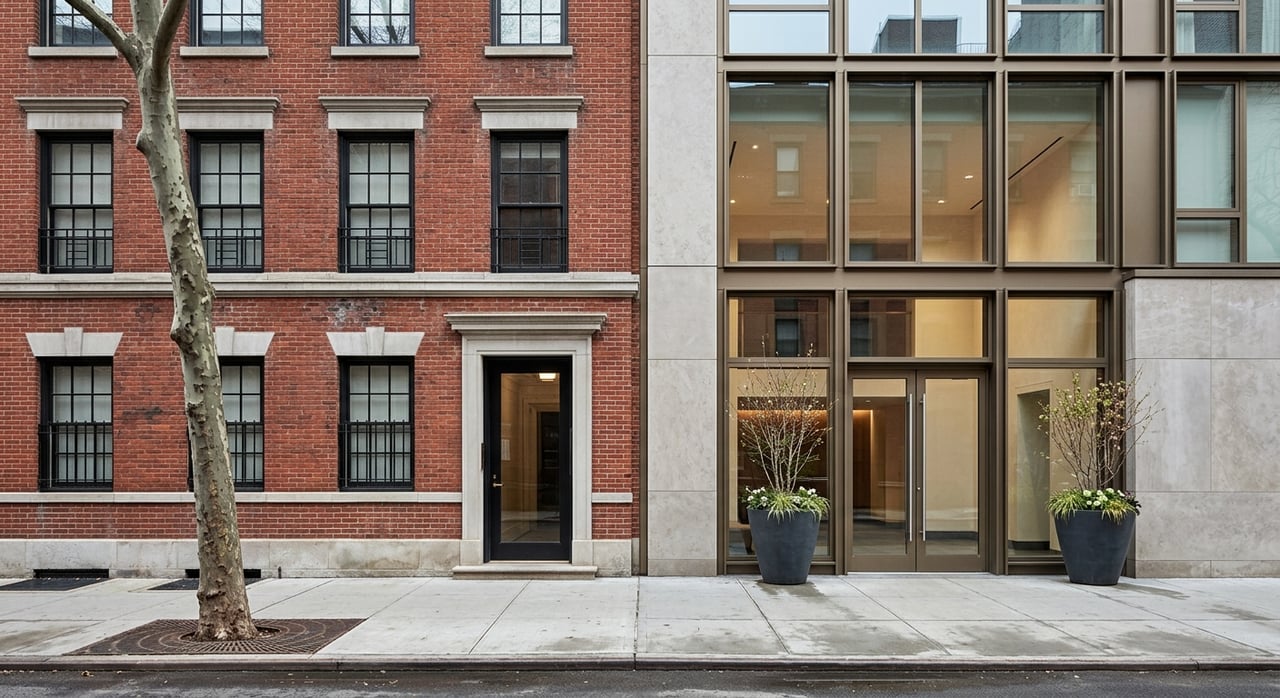
Trying to choose between a Hoboken condo and a Jersey City condo can feel simple at first, until you start comparing price, transit, taxes, building style, and long-term fit. If you want an easy answer, there is not one city that wins for everyone. What matters is which market lines up best with how you live, commute, and think about ownership costs over time. Let’s dive in.
Hoboken vs. Jersey City at a glance
Hoboken and Jersey City sit close together, but they offer very different condo experiences. Hoboken is just 1.28 square miles, while Jersey City covers nearly 15 square miles. That difference shapes almost everything, from neighborhood feel to inventory to how consistent the day-to-day experience is across each city.
In March 2026, Hoboken had 72 active condo, co-op, and townhouse listings with a median price of $835,000 and an average 26 days on market. Jersey City had 471 active listings with a median price of $704,500 and an average 36 days on market. In practical terms, Hoboken tends to feel tighter and more supply-constrained, while Jersey City gives you more variety and more price points.
Choose based on how you live
The best way to decide is not to ask which city is better in general. Ask which city fits your actual routine. Your commute, your budget, your building preferences, and your tolerance for monthly carrying costs should drive the choice more than the city name alone.
For some buyers, a compact footprint and central transit hub make Hoboken the clear fit. For others, broader inventory, newer towers, and more neighborhood options make Jersey City the smarter move. The right answer usually becomes clearer when you look at the details below.
Hoboken condo lifestyle
Hoboken often appeals to buyers who want a more compact, walkable environment. Because the city is smaller, many daily errands, dining options, and waterfront routes feel more connected and easier to reach on foot or by bike.
Transit is one of Hoboken’s biggest advantages. Hoboken Terminal connects commuter rail lines, PATH, ferry, Amtrak, and bus service, and the nearby Hoboken Light Rail station adds Hudson-Bergen Light Rail access. If you value having several transit modes centered in one place, Hoboken offers one of the simplest setups in the local market.
The city is also investing in outdoor connectivity. Hoboken says its Green Circuit will become continuous along the Hudson River waterfront from Pier A to the 14th Street Ferry Terminal, and bike lanes now exist on almost half of the city’s streets. If waterfront access, walking, and biking are part of your daily life, that can carry real weight.
Jersey City condo lifestyle
Jersey City gives you a broader menu of options. Because the city is much larger, condo living is more neighborhood-specific. Your experience can vary a lot depending on how close you are to PATH, light rail, ferry service, or major commercial areas.
That flexibility is a strength for many buyers. Jersey City’s transportation resources include PATH, Hudson-Bergen Light Rail, NJ Transit bus, ferry service, Citi Bike, and Via JC. The city also notes that close to 50% of residents commute by public transit, which speaks to how important transit access is in everyday life there.
The tradeoff is that convenience is more block-specific. Near major stations like Journal Square, Grove Street, Exchange Place, or Newport, transit access can feel extremely strong. Farther from those nodes, your commute and daily rhythm may feel very different, so location within Jersey City matters a great deal.
Condo inventory and price range
If choice matters most, Jersey City has the edge. With 471 active listings in March 2026 compared with Hoboken’s 72, Jersey City gives buyers more inventory to compare across size, style, age, and price band.
That larger inventory also supports a wider pricing spread. Hoboken’s median price of $835,000 suggests a market where scarcity can push values higher. Jersey City’s median price of $704,500 points to a broader range of entry points, though exact affordability still depends heavily on neighborhood, building type, and monthly ownership costs.
This does not mean Hoboken is overpriced or Jersey City is always cheaper. It means Hoboken often trades with more scarcity, while Jersey City offers more ways to enter the market. If you are balancing lifestyle with investment discipline, that distinction matters.
Building styles and amenities
Hoboken building character
Hoboken’s building stock often reflects a more preservation-sensitive environment. In locally designated historic districts, exterior additions, renovations, or alterations visible to the public require Historic Preservation Commission review, and exterior work such as painting and window replacement also requires permits in the historic district.
For buyers, that often translates into a more neighborhood-scale building fabric and a stronger sense of visual continuity. You may find more charm, more older housing stock, and more blocks where the built environment feels consistent.
That said, Hoboken is not frozen in time. Redevelopment plans like 930 Monroe and the North End include hundreds of new homes, affordable units, open space, retail, and infrastructure improvements. So the market is a mix of historic character and a smaller pipeline of newer projects.
Jersey City building variety
Jersey City is more structurally mixed. The city has five local historic districts and 14 local landmarks, but it also tracks substantial development activity across larger residential, commercial, and civic projects.
That means you can see a wider mix of housing types in Jersey City, including historic neighborhoods, loft-style conversions, repurposed industrial buildings, and large new high-rises. Bayfront is one example of newer mixed-income redevelopment planned around flood mitigation and a public waterfront walkway.
If you want a full-service high-rise or a newer amenity-rich building, Jersey City may offer more options. If you prefer a more compact and visually consistent urban setting, Hoboken may feel more aligned.
Taxes and monthly carrying costs
One of the most important differences between these markets is property tax rate. According to the 2025 New Jersey general tax-rate table, Hoboken’s effective tax rate is 1.070, while Jersey City’s is 1.847.
That gap can materially affect your monthly carrying costs and long-term affordability. Two condos with similar purchase prices can feel very different once taxes and HOA fees are factored into your budget.
In Jersey City, there is another layer to verify. The city notes that property taxes are based on assessed value times the tax rate, and it also collects abatement payments. In plain terms, buyers should confirm whether a specific condo is taxed conventionally or under a PILOT or other abatement structure before making assumptions about ownership cost.
Flood resilience and due diligence
In both cities, resilience should be part of your condo search from day one. This is especially important for waterfront or low-lying locations, where building-level protections can affect both livability and resale.
Hoboken highlights ResilienCity Park as part of a broader stormwater management strategy, with capacity to store up to 2 million gallons of rain. Jersey City describes itself as a dense coastal community vulnerable to flooding and climate impacts, and planning around Bayfront includes green infrastructure, flood mitigation, and shoreline adaptation.
For buyers, the takeaway is straightforward. Do not treat flood resilience as a side issue. Ask detailed questions about the building’s mitigation measures, maintenance planning, and how the location may affect insurance, operations, and long-term appeal.
Resale outlook and market positioning
No one can guarantee future appreciation, but current market conditions do suggest different strengths. Hoboken’s smaller inventory and faster average days on market point to a tighter market dynamic, which can support a scarcity-driven feel.
Jersey City’s larger inventory and broader redevelopment pipeline offer more entry points and more building types. That can be attractive if you want optionality, newer product, or a wider set of price and lifestyle choices.
From a strategy standpoint, Hoboken may appeal if you want a compact market with tighter supply. Jersey City may appeal if you want flexibility and selection. In either case, the smartest decision usually comes from evaluating the exact building, tax treatment, HOA health, resilience planning, and transit access rather than relying on a simple city-versus-city label.
How to choose well
If you are still deciding, use a practical framework:
- Choose Hoboken if you value a central commuter hub, a compact footprint, a more historically regulated streetscape, and a market that appears tighter on supply.
- Choose Jersey City if you want more inventory, more newer full-service buildings, multiple transit options across different districts, and a wider price spectrum.
- In either city, compare HOA reserves, flood mitigation, tax treatment, and exact station proximity before deciding.
That last point is where many smart buyers gain an edge. The city matters, but the building and block often matter more.
A well-chosen condo should support your routine, your risk tolerance, and your long-term plans. If you want a strategic second opinion on Hoboken versus Jersey City, Michael Olim brings a calm, detail-oriented approach shaped by hands-on investment experience, renovation insight, and high-touch advisory across New York and New Jersey.
FAQs
How do Hoboken and Jersey City condo prices compare?
- In the March 2026 Hudson County market report, Hoboken’s condo, co-op, and townhouse median price was $835,000, while Jersey City’s was $704,500.
Which city has more condo inventory, Hoboken or Jersey City?
- Jersey City had 471 active condo, co-op, and townhouse listings in March 2026, compared with 72 in Hoboken, giving buyers a much broader selection.
Is transit better for condo owners in Hoboken or Jersey City?
- Hoboken stands out for the all-in-one convenience of Hoboken Terminal, while Jersey City offers more transit redundancy across PATH, light rail, buses, ferry service, and other options depending on the neighborhood.
Are property taxes higher in Hoboken or Jersey City condos?
- Based on the 2025 New Jersey general tax-rate table, Jersey City’s effective tax rate of 1.847 is higher than Hoboken’s 1.070, which can have a major impact on monthly carrying costs.
What building types can condo buyers expect in Hoboken and Jersey City?
- Hoboken often offers a mix of preservation-sensitive older buildings and a smaller set of newer redevelopment projects, while Jersey City includes historic districts, loft-style conversions, repurposed industrial buildings, and larger new high-rises.
Why does flood resilience matter for Hoboken and Jersey City condos?
- Both cities face coastal and stormwater risk, so buyers should review building-level flood mitigation, maintenance planning, and location-specific resilience factors as part of normal condo due diligence.