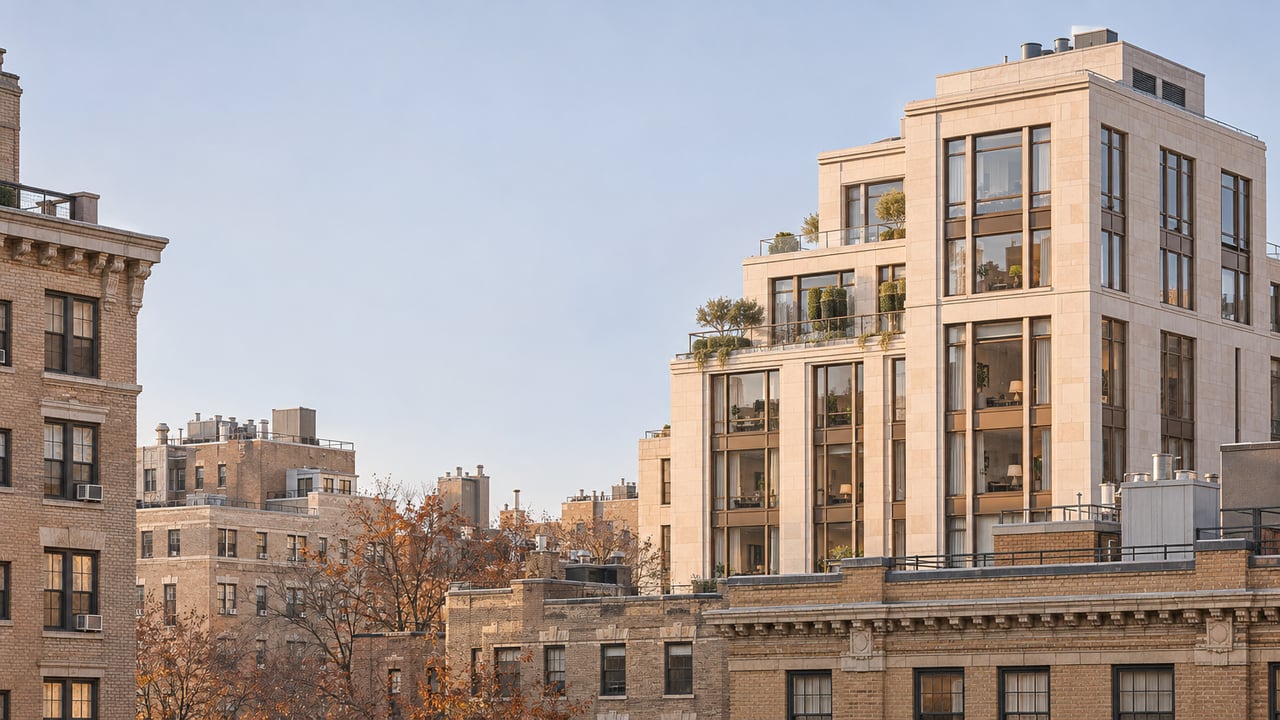
On August 3, 2026, Fannie Mae retired a shortcut most Midtown Manhattan condo buyers never knew existed. For years, an established condo building could qualify for what underwriters called a Limited Review, a lighter paperwork path that let a lender approve a project without digging into its budget, its reserve fund, or its delinquency rate. For a condo loan that a lender intends to sell to Fannie Mae or Freddie Mac, the Limited Review shortcut no longer applies: applications dated on or after August 3 go through a Full Review, and the building's finances, not just the buyer's, can affect whether the deal closes.
This lands unevenly across Manhattan. A cash buyer closing on a Tribeca loft or a West Village townhouse conversion never touches this process at all. A buyer financing a sub-$1 million condo in Midtown East or Murray Hill with a loan intended for sale to Fannie Mae or Freddie Mac, where deals have been closing within two weeks specifically because buyers move fast on financed offers, is now shopping in the segment of Manhattan most exposed to this change.
What Full Review actually checks
For condo loans a lender intends to sell to Fannie Mae or Freddie Mac, Fannie Mae's Lender Letter LL-2026-03, issued in March and phased in through the rest of 2026 and into 2027, replaces the old shortcut with a review that examines a building's operating budget, its reserve allocation, its delinquency rate, any pending litigation, and its insurance coverage before a unit's loan can be approved. According to the Community Associations Institute, Limited Review had covered roughly 40 percent of all condo project reviews nationally. That is a large share of ordinary transactions now routed through a slower, document-heavy process instead of the old streamlined path.
| Limited Review, before August 3, 2026 | Full Review, for Fannie Mae/Freddie Mac-bound loans, August 3, 2026 onward | |
|---|---|---|
| Reserve documentation | Minimal, often not requested | Budget, reserve study, and reserve allocation confirmed |
| Delinquency rate | Not typically reviewed | Reviewed against a set threshold |
| Litigation disclosure | Rarely requested | Required as part of the building file |
| Investor concentration | According to HGAR, capped at 50 percent of units | Cap eliminated for established buildings |
| Typical preapproval timeline | About two weeks | Four to eight weeks |
The Mortgage Bankers Association has cautioned that processing times for loans subject to Full Review will stretch during this transition, with the actual delay depending on how quickly a building's managing agent can assemble the documentation lenders now require.
The gap in New York law that makes older Midtown towers vulnerable
According to condoscoopsnyc.org, New York has no statute requiring a condominium or cooperative to maintain a minimum reserve fund or commission a reserve study. Florida imposed that kind of mandatory reserve funding after the 2021 Champlain Towers South collapse in Surfside. New York never followed. Low common charges make units easier to sell, so plenty of boards have kept them low for years. Full Review is built to surface exactly that pattern.
The next threshold makes the stakes concrete. Fannie Mae is raising the minimum reserve allocation from 10 percent to 15 percent of a building's annual budgeted assessment income, a requirement that applies to full review loan applications dated on or after January 4, 2027.
Why the exposure concentrates in Midtown East and Murray Hill
Manhattan's submarkets carry this risk differently. Local market commentary has described Midtown East and Murray Hill as Manhattan's most competitive entry-level segment, the corridor where sub-$1 million deals close within two weeks. A market that moves that fast at that price point runs on financing. It is also a market built substantially from postwar and older prewar towers, the kind more likely to have priced common charges competitively for decades rather than funding reserves aggressively.
Monthly sales data reported in early 2026 already showed Midtown contract activity down roughly 21 percent from the year before, softer footing than much of the rest of Manhattan even before Full Review added a new layer of scrutiny in August. A segment already working with less cushion is the one whose buyers using loans intended for sale to Fannie Mae or Freddie Mac are now absorbing a slower, more document-intensive approval process.
What to ask before writing an offer
Before signing a contract on a Midtown condo this fall, request the following from the building's managing agent:
- The current reserve fund balance measured against the annual operating budget
- The most recent reserve study, if one exists, and whether the board has adopted its recommendations
- Any pending or discussed special assessment, and what it is for
- The building's delinquency rate among unit owners
- Whether any litigation involving the building is active or was recently settled
- The master insurance policy's coverage level and per-unit deductible
For a loan intended for sale to Fannie Mae or Freddie Mac, a mortgage contingency written around the old two-week preapproval timeline no longer fits this process. Attorneys handling those transactions should build in the four to eight week window the Mortgage Bankers Association has flagged for Full Review, and buyers should confirm with their lender whether the building has already cleared a project review before that contingency deadline arrives.
The cost of finding out too late
A Full Review issue can also depress marketability across every listing in the building until the issue is resolved. For a seller in an older Midtown tower, that risk is worth addressing with the managing agent before a listing goes live, not after a buyer's loan gets flagged mid-contract.
Common questions
Does this change affect co-ops too? Fannie Mae's Full Review overhaul is built primarily around condominiums. Co-ops are underwritten differently, though HousingWire reports Fannie Mae is exploring separate reserve guidance for co-ops. Nothing on that front has been finalized.
Does this matter if I am paying cash? Full Review only applies when a lender intends to sell the loan to Fannie Mae or Freddie Mac. A cash purchase bypasses the review entirely, which is part of why this change lands harder in financing-dependent corridors like Midtown East than in cash-heavy pockets of Tribeca or the West Village.
If you are weighing an offer on a Midtown Manhattan condo this fall, or sitting on a board trying to work out how your building's numbers will read under Full Review, get the reserve conversation started before it becomes a problem at the closing table. Michael Olim advises buyers, sellers, and boards across Manhattan on exactly this kind of due diligence. Let's Connect.
This article is general information, not legal, tax or financial advice. Consult a qualified professional about your situation.